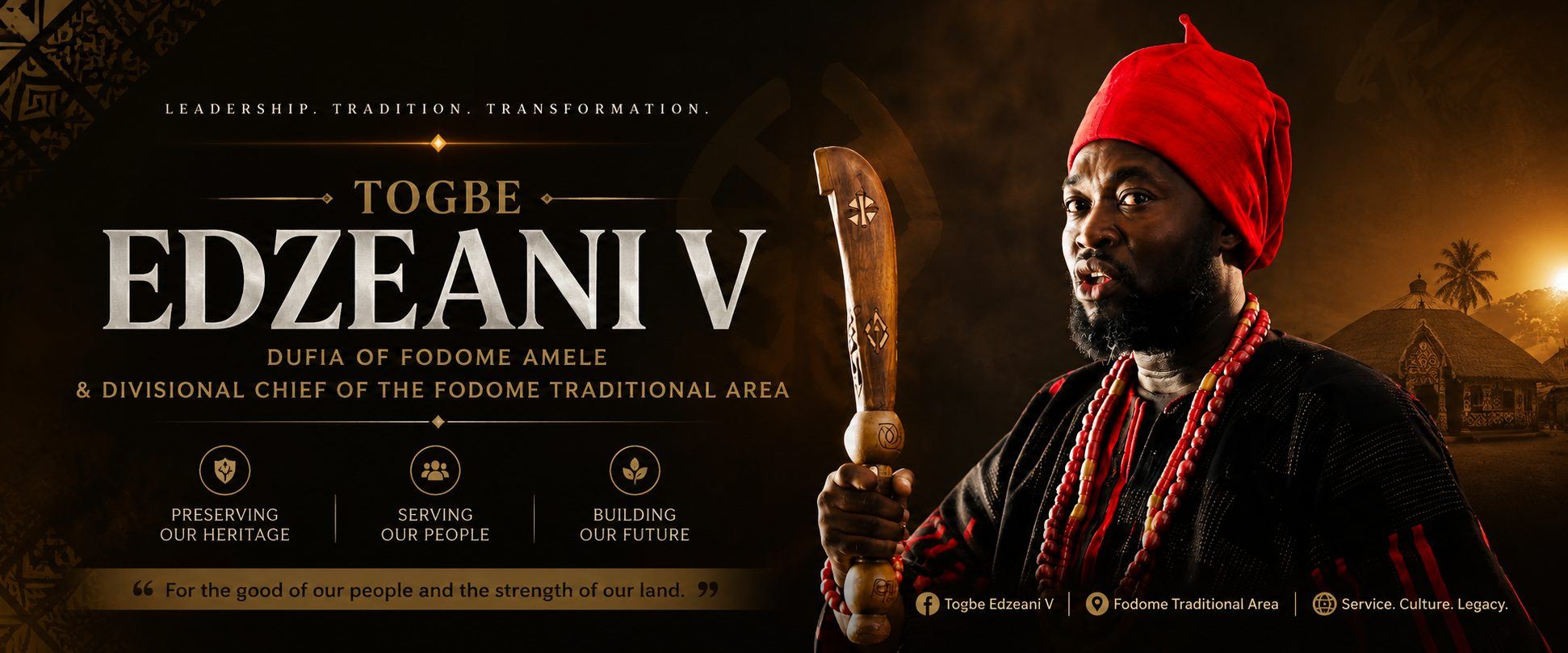
Fodome Heritage
The history, community and customs of Fodome Amele.
The first human settlement of the Fodome people
Fodome Amele holds a special place in Fodome history as its first human settlement. Its heritage, traditions and history form an important part of who the Fodome people are. As Togbe Edzeani V, he accepts the responsibility of helping to preserve that heritage while ensuring the community moves confidently into the future.
The community of Fodome Amele
The Land
A fuller account of Fodome Amele’s geography and setting will be added here.
The Tradition
The customs and traditions of Fodome Amele, including its ceremonies and the role of the stool, are documented gradually across this site.
Oral History
Oral histories and further historical detail will be preserved here as the Fodome Archives grow.
The Title
Togbe Edzeani V holds the title of Dufia of Fodome Amele and Divisional Chief of the Fodome Traditional Area. The fuller traditional significance of this title, and its history within the Fodome stool, will be documented here as the Archives grow.
The Responsibility
Fodome Amele holds a special place in Fodome history as its first human settlement, and its heritage, traditions and history form an important part of who the Fodome people are. As Togbe Edzeani V, he has accepted the responsibility of helping to preserve that heritage while ensuring the community moves confidently into the future — a responsibility he describes as one accepted “with humility, conviction and a deep sense of duty.” Read his vision for Fodome Amele →
The Fodome Traditional Council
Togbe Edzeani V was installed by the Fodome Traditional Council, under the leadership of the Paramount Chief, Togbega Gbedegbleme Akpatsa II. His installation and the Stool Cleaning Rites were both honoured by the presence of the Council’s elders and distinguished chiefs, whose presence reflects the unity, dignity and continuity of the Fodome traditional institution.
The Elders and Chiefs
The chiefs, elders and queen mothers of the Fodome Traditional Council play a central role in the life of the stool — present at its ceremonies, and partners in the work of community-led development. See them at the installation and the Stool Cleaning Rites →
The Regalia
Traditional cloth, beads and headwear mark the ceremonies of the stool — from the kente and white cloth worn at the Stool Cleaning Rites to the regalia of installation day. A fuller account of each garment’s meaning will be added to the Archives in time.
The Symbols of Leadership
Among the symbols of his office is the ceremonial horsetail whisk, carried during the rites and ceremonies of the stool.
Service to the People
The stool carries a mandate of service — to living conditions, youth opportunity, community development and environmental sustainability in Fodome Amele. Explore the vision →
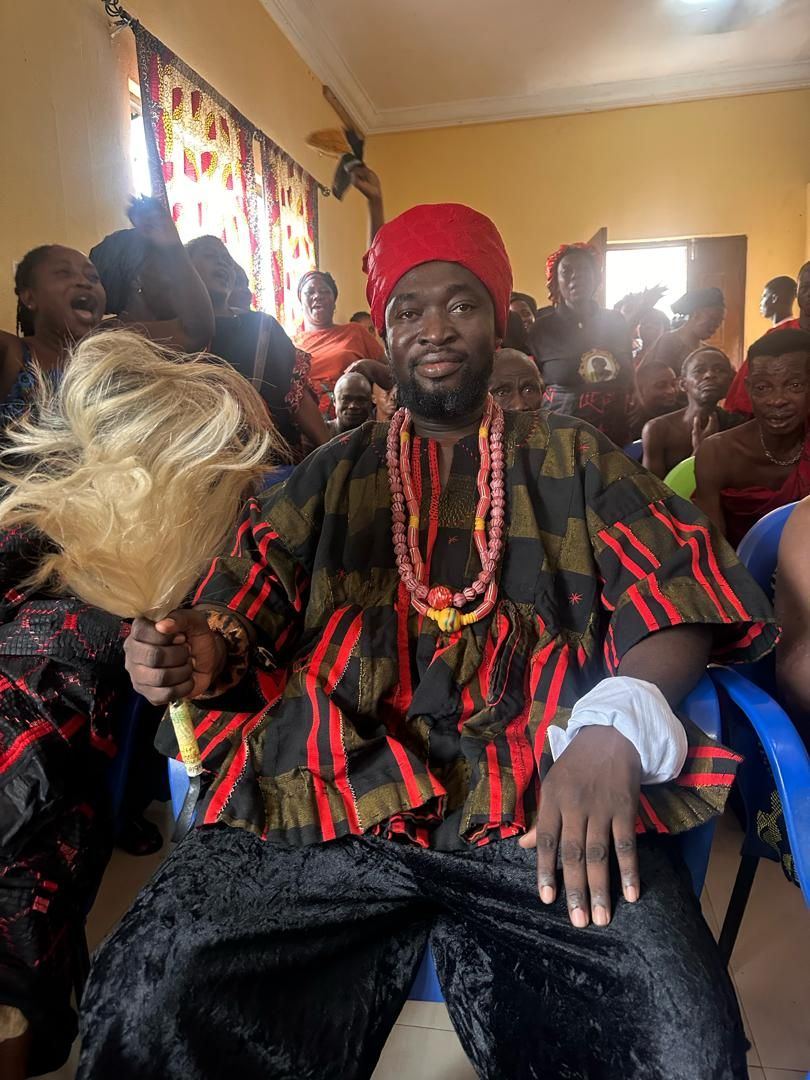
The ceremonial horsetail whisk
Carried during the rites and ceremonies of the stool, the horsetail whisk is among the visible symbols of Togbe Edzeani V’s office.
This page will grow as more of the Fodome stool’s history and traditions are documented in the Fodome Archives.